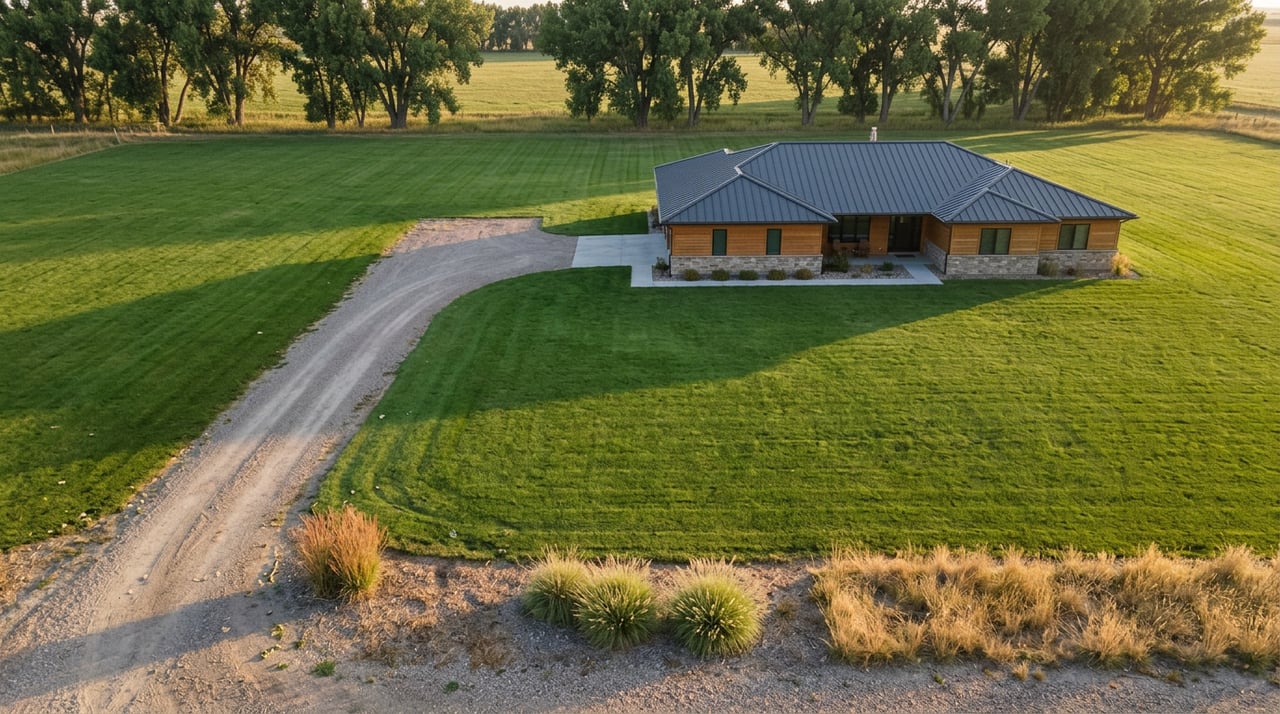
Loveland Acreage Water Rights That Convey at Sale
August 27, 2026
August 27, 2026
"Buyers should never assume that water comes with a property." That's Colorado State University Extension's plain summary of decreed water rights, and it undersells how often the assumption gets made anyway. Walk the acreage listings west of Loveland and you'll find water rights tucked into the feature list like a throwaway upgrade: a single share in the Christian Lateral Ditch Company noted alongside granite counters and a new furnace, as if it belongs in the same category of home improvement.
It doesn't. In Colorado, a water right is its own piece of real property, conveyed by its own paperwork, and priced on its own market. On a West Loveland parcel with irrigated pasture or a pond, that one line item on the listing sheet can be worth more than the structure sitting on the land.
Colorado real estate transactions can involve three distinct kinds of water rights: groundwater or well rights, shares of stock in a mutual ditch or reservoir company, and decreed rights approved directly by the state water courts. Each moves differently at closing. A well right typically requires a Change of Ownership form filed with the state after closing. A decreed right gets described in the deed itself, or in a separate water rights deed recorded alongside it. Ditch company shares, the kind most common on Loveland-area acreage, transfer through a stock assignment, the same mechanism you'd use to sign over shares in a private company, because that is legally what a mutual ditch company is.
Colorado law does allow water rights to pass automatically under a deed's appurtenance clause if nothing else is specified, but title professionals caution that when the nature of the right isn't spelled out, the safest move is explicit language in the deed naming every ditch, reservoir, well, and spring intended to convey. Silence invites a dispute a court eventually has to resolve. That's not a paperwork nuance for West Loveland buyers and sellers with real acreage. It's the difference between owning an amenity and owning a rumor about one.
Numbers make this concrete. In a public purchase agreement, the Town of Berthoud paid $204,000 for a 0.85 share of Handy Ditch Company stock, converting the water from agricultural to municipal use through a water court proceeding. Run the math and that's roughly $240,000 for a single full share. The same transaction also picked up 1.3 shares of the Loveland Lake and Ditch Company as part of the town's broader water resources strategy.
A municipality paying to convert agricultural water to municipal use isn't the same market as a private buyer picking up a farmhouse with irrigated hay ground attached. But the Berthoud filing does something a median home price never does: it puts a real dollar figure on a fractional ditch share, from a public record, in the exact watershed serving Loveland-area land. It tells you the scale of what's at stake when a listing casually notes "1 share of water" without naming the certificate number, the exact ditch company, or whether that share is even transferring with the sale. That line isn't decoration. On the right parcel, it can be the single most valuable asset in the transaction.
Here's the friction that catches people off guard: Colorado has no central ownership registry for water rights. The Office of the State Engineer doesn't track who owns what. To find out which water rights actually run with a specific piece of land, you research the deed history at the county clerk's office and then call the ditch company directly to confirm the share count on its own books.
Larimer County's own directory of local irrigation ditch companies runs long, and a handful of the names on it are the ones you'll actually encounter on West Loveland acreage:
Each is a separate private, non-profit corporation with its own bylaws, its own stockholder registry, and its own annual assessment for maintaining headgates and laterals. There's no shortcut that lets a buyer or agent check all of them at once. Verifying water rights on a specific parcel means identifying which company serves that ground and then contacting that company by name, every time.
Acreage buyers touring West Loveland properties often fall for a version of the same mistake: they see a ditch crossing the back of the lot, or a pond catching the evening light, and assume ownership of the land includes rights to that water. Colorado real estate attorneys note that property owners are frequently surprised to learn they may not own or control the very ditch or pond running through their land.
If the purchase doesn't include the water rights attached to that ditch or pond, the buyer isn't just missing out on irrigation. They're also legally prohibited from interfering with or altering the structure, and the party that does hold the rights retains the ability to enter the property to maintain, repair, or alter it. A picturesque water feature can come with an easement obligation attached, not a benefit, if the rights were never part of the deal.
The Colorado Real Estate Commission's approved Contract to Buy and Sell Real Estate includes a dedicated section for describing exactly which water rights convey, whether decreed rights, ditch or reservoir company shares, or well rights. For a West Loveland acreage deal, that section deserves the same scrutiny as the price and closing date, not a quick initial.
A few things worth building into the timeline before you're at the closing table:
Sellers should confirm the exact number of shares, the certificate number, and the ditch company's current bylaws and assessment schedule before the property ever goes live, so the listing states a verifiable fact instead of a vague amenity. Buyers should ask their attorney to review or draft the stock assignment separately from the general purchase contract, since a signed deed alone doesn't transfer ditch company shares. If a well is part of the deal, the Change of Ownership form needs to go to the state around the time of closing, not months later. And for anyone eyeing a subdivision of acreage under 35 acres, Colorado law requires the county to obtain a water supply report showing an adequate supply exists for each new parcel, a detail that matters for developer clients working presale programs on raw ground as much as it does for a family splitting a family farm.
Does every acreage property in West Loveland come with water rights? No. Some parcels have full or fractional ditch shares attached, some have well rights only, and some have neither despite visible irrigation infrastructure nearby. It varies parcel by parcel and has to be verified individually.
The listing just says "water rights included." Is that enough? Not for a contract. Ask for the specific ditch company name, the share count, and the stock certificate number in writing before you're under contract, and have your attorney confirm the seller's deed history supports the claim.
Who do I actually call to verify shares on a specific property? Start with the county clerk and recorder for the deed history, then contact the named ditch company, whether that's Handy Ditch Company, Loveland Lake and Ditch Company, or another local mutual company, to confirm the current share count on its books.
The number on the listing sheet that says "1 share of water" isn't a detail to skim past. On the right piece of West Loveland ground, it's the asset the rest of the negotiation should be built around.
If you're evaluating acreage in West Loveland, or preparing a property with ditch shares attached for sale, Beth Bishop Real Estate can walk through what's actually documented on a specific parcel before you write or accept an offer. Schedule Your Complimentary Home Strategy Consultation to start with the paper trail, not the assumption.
Stay up to date on the latest real estate trends.
We pride ourselves in providing personalized solutions that bring our clients closer to their dream properties and enhance their long-term wealth.