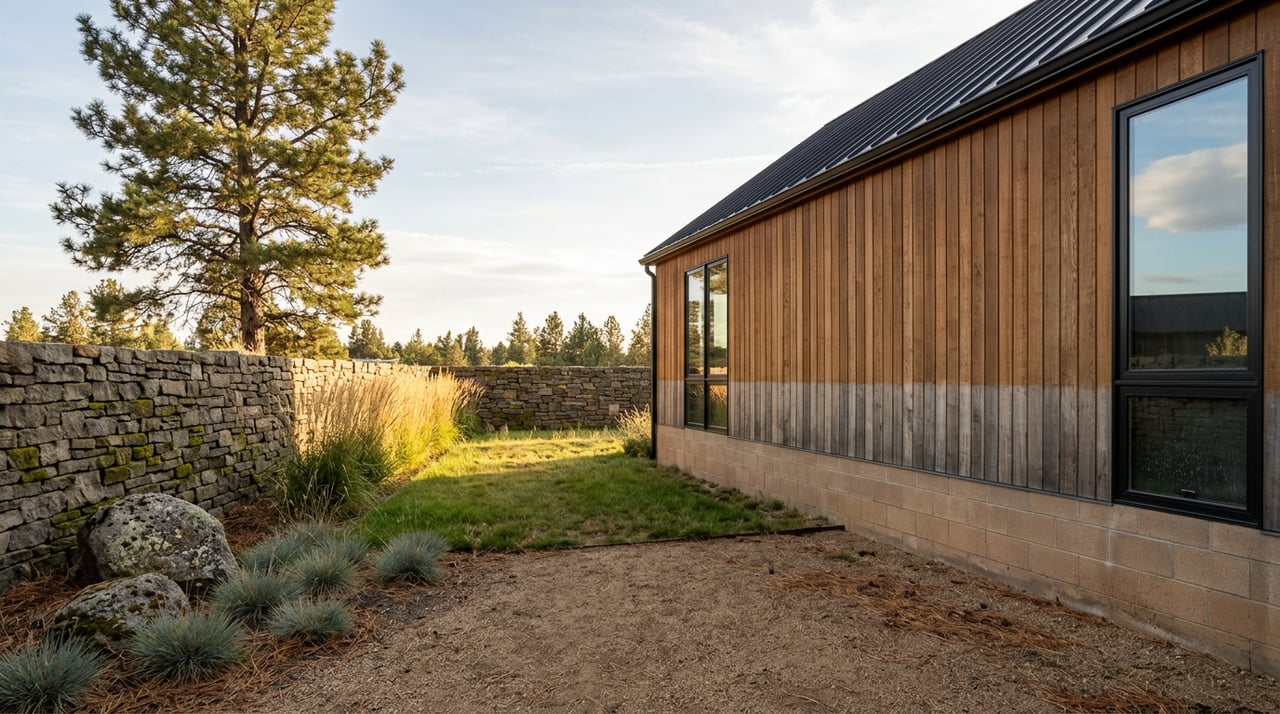
Fort Collins Irrigation Ditch Easements on Property
September 10, 2026
September 10, 2026
Walk along College Avenue near Colorado State University and you would never guess that a functioning irrigation ditch runs somewhere beneath your feet. The Arthur Ditch was first dug in 1869 to water farmland from the Cache la Poudre River, and it still does that job today. Roughly eight miles of it wind through the center of modern Fort Collins and across the CSU campus, some sections open to the sky, most of it buried under streets and backyards after a 1930s public safety campaign convinced the city to pipe and enclose the worst of it. A historian later quoted the 1929 Fort Collins Courier calling the old town ditch "a constant menace to life and property." The city agreed enough to bury it. It did not agree to make it disappear.
That is the part sellers and buyers in Fort Collins tend to miss. A ditch that has been paved over, fenced around, or forgotten by three generations of homeowners has not lost its legal standing. In Colorado, the company that owns a ditch or canal can retain a right to enter your property, maintain the channel, and use whatever strip of land is "reasonably necessary" to do it, and that right can predate your deed, outrank your fence, and never once appear in a title search.
Most easements in Colorado are created by a recorded document. Ditch easements are the exception. Under state law, once a ditch has been excavated and used without objection from the underlying landowner, that consent is presumed permanently. No deed, no recorded agreement, no signature required. The Larimer County government's own guidance on this is direct: whether a ditch is owned fee simple or by easement changes everything about who controls that strip of land, and the width of an easement-based ditch right of way is "often determined by historic practices and is not always described in a deed."
In practice, that means a buyer's title company can come back clean and a ditch company can still show up next spring to clear brush, regrade a bank, or tell a homeowner their new fence has to come down. Colorado water law firms that handle these disputes note that ditch easements frequently do not show up in property records at all, which means the only reliable way to find one is to walk the property and ask the right questions before closing, not after.
Fort Collins has more of these than most Front Range cities, because the town itself was platted around its water supply. Three of the oldest working canals, the New Mercer Ditch, the Larimer County Canal No. 2, and the Arthur Ditch, cross what the city calls the Canal Importation Basin, a five-mile band running through the central and west side of town. These canals were built more than a century ago to reach farmland that has since become subdivisions, parks, and school grounds, and the city's own stormwater planning documents acknowledge that the ditches still intercept and redirect drainage in ways that matter during flood events.
If you own a lot near Rolland Moore Park, City Park, west of Overland Trail, or anywhere in the older grid west of College Avenue, there is a real chance one of these ditches touches your property line even if you have never noticed a wet ditch bank. The Pleasant Valley and Lake Canal, the Larimer County Canal No. 2, and the New Mercer Ditch all show up on the city's own list of ditch companies with active rights of way inside Fort Collins city limits, alongside smaller laterals most residents have never heard of.
This is not purely historical trivia. In 2006, city stormwater upgrades tied directly to the New Mercer Ditch and Larimer County Canal No. 2 eliminated uncontrolled spills between Mulberry Street and the West Vine basin boundary and removed more than 120 homes from the 100 year floodplain. A separate drainage project along the same ditch corridor was designed specifically to reduce flood risk in areas that had been hit hard by the 1997 flood. The ditches did not cause those floods on their own, but they were part of why certain blocks flooded and part of why the fix took city engineering, not just a homeowner's shovel.
Here is where the story gets interesting for anyone trying to price or market a Fort Collins property. The exact same ditch can be a liability to one buyer and a selling point to another, and the difference has nothing to do with the ditch and everything to do with what the buyer wants to do with the land.
A Fort Collins listing marketed several irrigated acres bordering the New Mercer Ditch as a lifestyle feature, complete with foothill views and a shared easement driveway tied back to a family farm that supplied eggs to local stores for more than seventy years. For a buyer who wants pasture, that ditch frontage is the whole reason to write an offer.
For a buyer who wants a fully fenced backyard and no surprise visits from a ditch crew, that same frontage is a problem waiting to be discovered at inspection. Colorado State University's extension office notes that ditch companies generally have the right to prohibit or set conditions on any fence that crosses their right of way, because fences interfere with maintenance access and collect debris. A seller who fences across a known easement without asking first is not creating a defect that shows up on a home inspection report. They are creating a legal dispute that shows up after closing.
This is the piece that catches even careful sellers off guard. Colorado's Seller's Property Disclosure forms, both the residential version and the land version, were updated by the Colorado Real Estate Commission for use on and after January 1, 2026, and they still run on the same core standard they always have: sellers disclose to their "current actual knowledge." If a seller genuinely does not know a ditch easement exists, because nobody told them and it never appeared in their own title work, the disclosure form will not surface it either. Silence on the form is not proof the ditch right does not exist. It is only proof nobody has checked yet.
That gap is exactly why a listing agent who knows the local ditch map earns their fee before a contract is even written, not after an inspection objection lands.
A few concrete steps close most of this gap early, before it becomes a renegotiation:
Does a ditch easement show up in a normal title search? Not reliably. Many are unwritten and based on decades of use rather than a recorded document, so a clean title report is not the same as a ditch free property.
Can I just remove an old ditch that no longer carries water on my land? Not unilaterally. Colorado law treats a ditch owner's rights as protected even during periods when the ditch is not actively flowing, and removing or altering it without the ditch company's agreement can create real legal exposure.
Does this only affect older homes in Old Town? No. The Canal Importation Basin cuts through newer neighborhoods on the west side of the city too, and several of the ditches involved run for miles well beyond their original 19th century farmland.
A ditch on a Fort Collins property is not automatically bad news and it is not automatically a bonus. It is a fact about the land that changes the conversation depending on who is buying it and what they plan to do with the yard. Getting that conversation started early, with someone who already knows which canals run where, is what keeps it from becoming a late surprise at the closing table.
If you are getting ready to list a Fort Collins property with an old ditch, canal, or lateral anywhere near the lot line, or you are shopping in a neighborhood where you suspect one might be buried underfoot, Beth Bishop Real Estate can help you sort out what it actually means for your sale before it becomes a contract issue. Schedule Your Complimentary Home Strategy Consultation and bring your questions about what is really running through your backyard.
Stay up to date on the latest real estate trends.


We pride ourselves in providing personalized solutions that bring our clients closer to their dream properties and enhance their long-term wealth.