Fort Collins ADU Costs: How Your Water Provider Shapes the Budget
September 24, 2026
September 24, 2026
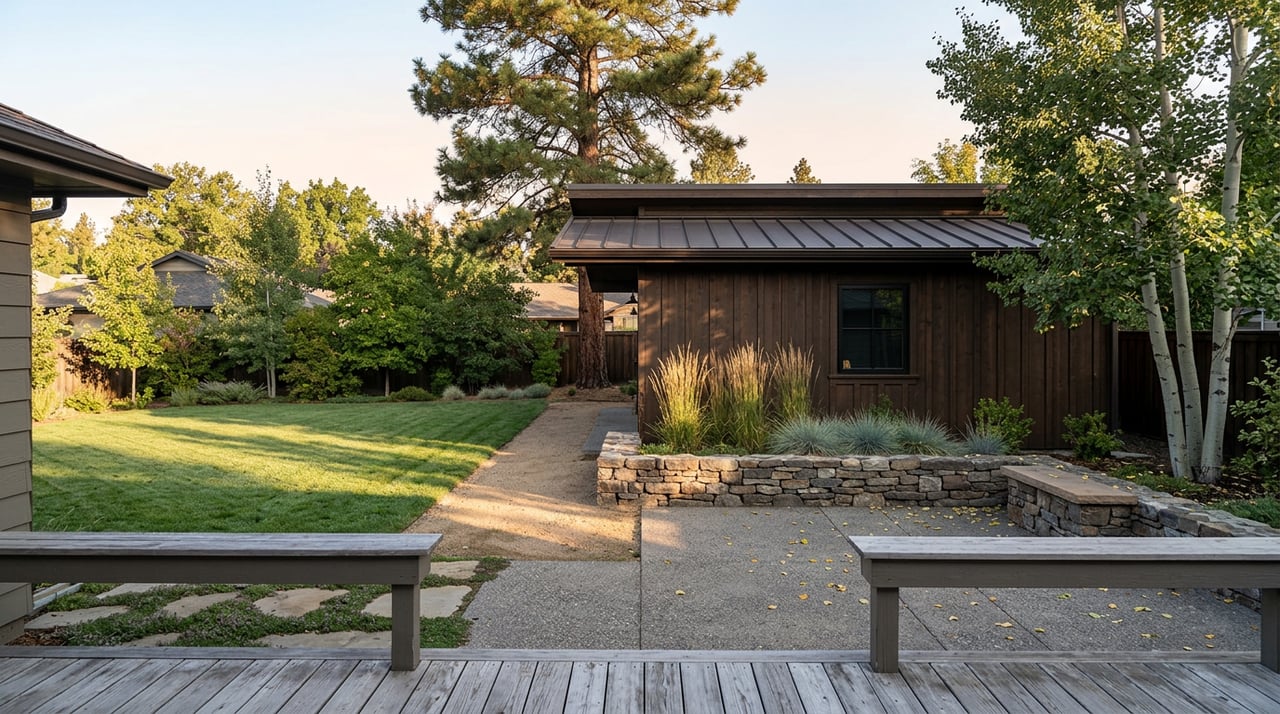
Two homeowners on the same Fort Collins street decide to build a backyard cottage. Same lot size, same zoning, same 750-square-foot plan pulled from a builder's catalog. One of them pays close to $20,000 in city and utility fees before a shovel touches dirt, according to ADU Glossary. The other pays over $27,000 for the identical unit, on the identical block, under the identical law, according to Olerra.
The difference has nothing to do with permits being denied or design review dragging out. It comes down to which water utility happens to serve their specific parcel, a detail that has nothing to do with zoning and everything to do with which agency the original developer dedicated water rights to decades ago. That is the part of the Fort Collins ADU story that "now legal everywhere" doesn't tell you.
Colorado's House Bill 24-1152 took effect June 30, 2025, requiring every city inside a metropolitan planning organization, Fort Collins included, to allow at least one accessory dwelling unit on any lot where a single-family home already stands or could be built. The state law also barred cities from imposing owner-occupancy rules, ADU-specific minimum lot sizes, or design standards stricter than what applies to the primary house.
Fort Collins moved fast. The city adopted Ordinance 009, 2025, with a first reading on January 21, 2025, and Land Use Code amendments effective February 14, 2025, ahead of the state deadline. Before that ordinance, ADUs were mostly confined to Old Town and a handful of newer neighborhoods, according to NOCO Style, citing Clay Frickey, the city's planning manager. The new code opened the door across traditional single-family neighborhoods that had been zoned for low density since they were built.
That part of the story is genuinely good news for anyone weighing a lot purchase with a future rental unit or in-law suite in mind. The part that gets skipped in most summaries is what happens after the zoning question is settled.
Fort Collins is not served by one water utility. Depending on the parcel, a home might be on City of Fort Collins Utilities, the Fort Collins-Loveland Water District, or the East Larimer County Water District. Which one applies is determined by whether the builder dedicated water rights to the city or to the district at the time the home was originally constructed, a fact FCLWD itself tells customers they may need to call and ask about because it isn't obvious from an address.
Each of those providers runs its own Plant Investment Fee schedule, and each raises those fees on its own timeline. For 2026, FCLWD's full three-quarter-inch residential tap PIF rose from roughly $17,000 to $27,175, on top of a base rate increase that FCLWD says its board approved for the same year. That single line item can swing the cost of an otherwise identical ADU by ten thousand dollars, and it has nothing to do with the size of the unit, the quality of the finishes, or how the lot is zoned.
This is the detail worth sitting with if you're comparing two Fort Collins properties with ADU potential. A lot's water provider doesn't show up on a listing sheet the way school district or lot size does, but it can move the total project cost more than almost any design decision the homeowner actually controls.
The zoning map tells you where an ADU is allowed. It doesn't tell you what one costs. That answer lives in a water district boundary most buyers never think to ask about.
There's a second twist buried in Ordinance 009 that changes the return calculation for anyone eyeing an ADU as short-term rental income. The ordinance, codified at Section 15-646 of the city code, prohibits short-term rental use on any ADU permitted on or after January 1, 2024. Units that already held a short-term rental license before that date are grandfathered. Everything built or permitted after is long-term-rental-only by law.
That distinction matters for anyone evaluating a property based on projected Airbnb income from a backyard unit. If the ADU doesn't exist yet, or was permitted on or after January 1, 2024, the short-term rental thesis simply doesn't apply in Fort Collins city limits. The unit can still generate rental income, but only as a standard lease, which changes both the monthly number and the type of tenant a homeowner is likely to attract.
The fee stack for a Fort Collins ADU includes a flat Basic Development Review fee of $6,925, standard building permit charges, and the Plant Investment Fee that varies by water provider and by fixture count in the new unit.
Construction costs run separately and vary more widely. A common quote homeowners hear early in the process lands near $180,000 for a compact detached unit. The same project, actually permitted through the city and built to code for Front Range conditions, more often finishes between $250,000 and $280,000. The gap isn't sloppy estimating on either side. It's a set of Fort Collins-specific costs that a bare per-square-foot number leaves out entirely.
A few of those costs are easy to miss until they show up on an invoice:
These costs hit the smallest, most affordable units hardest, since a fixed fee or a fixed engineering requirement is a much bigger share of the budget on a 500-square-foot studio than on a larger unit.
There's one more jurisdictional detail worth knowing if a property sits near the city's edge. Larimer County has created a 2026 program that waives building permit fees, an estimated savings of $3,000 to $14,000, for homeowners in unincorporated parts of the county who agree to rent their ADU at an affordable rate. The program is expected to fund only a small number of units when it launches, and it applies to unincorporated county land, not property inside Fort Collins city limits. A lot that looks similar on a map can fall on either side of that line, and the eligibility difference is worth confirming with the county before assuming a fee waiver applies.
None of this changes whether an ADU is legal on a given Fort Collins property. Under HB24-1152 and Ordinance 009, 2025, almost every single-family lot in the city qualifies. What it changes is the number a buyer should actually budget, and that number depends on details a standard listing won't surface. Before treating a lot's ADU potential as a selling point or a line item in an offer, it's worth confirming:
Does every lot in Fort Collins qualify for an ADU? Almost every lot zoned for a single-family home qualifies under state and city law. A few exceptions exist for properties in the Poudre River floodplain, where new dwelling units aren't permitted, and for lots in wildfire-prone western foothills areas, which may require additional fire-resistant construction.
Can I rent my new ADU on Airbnb? Only if it held a short-term rental license before January 1, 2024. Anything permitted on or after that date is restricted to long-term rental under city code.
How do I find out which water utility serves a specific address? Call the water provider directly. FCLWD notes on its own site that the determining factor is which agency received dedicated water rights when the home was originally built, which isn't always obvious from a city map.
How long should I plan for, start to finish? Realistically about a year: two to three months for Basic Development Review, six to eight weeks for the building permit, and four or more months for construction and final inspections.
None of these numbers are reasons to avoid an ADU. They're reasons to ask the right questions before writing an offer that assumes one is simple to add. If you're weighing a Fort Collins property with a backyard unit in mind, whether for a rental, a family member, or long-term flexibility, Beth Bishop Real Estate can help you check the details that actually move the budget before you're under contract. Schedule Your Complimentary Home Strategy Consultation to walk through a specific property and what it would really take to add one.
This article is general information, not legal, tax or financial advice. Consult a qualified professional about your situation.
Stay up to date on the latest real estate trends.
We pride ourselves in providing personalized solutions that bring our clients closer to their dream properties and enhance their long-term wealth.