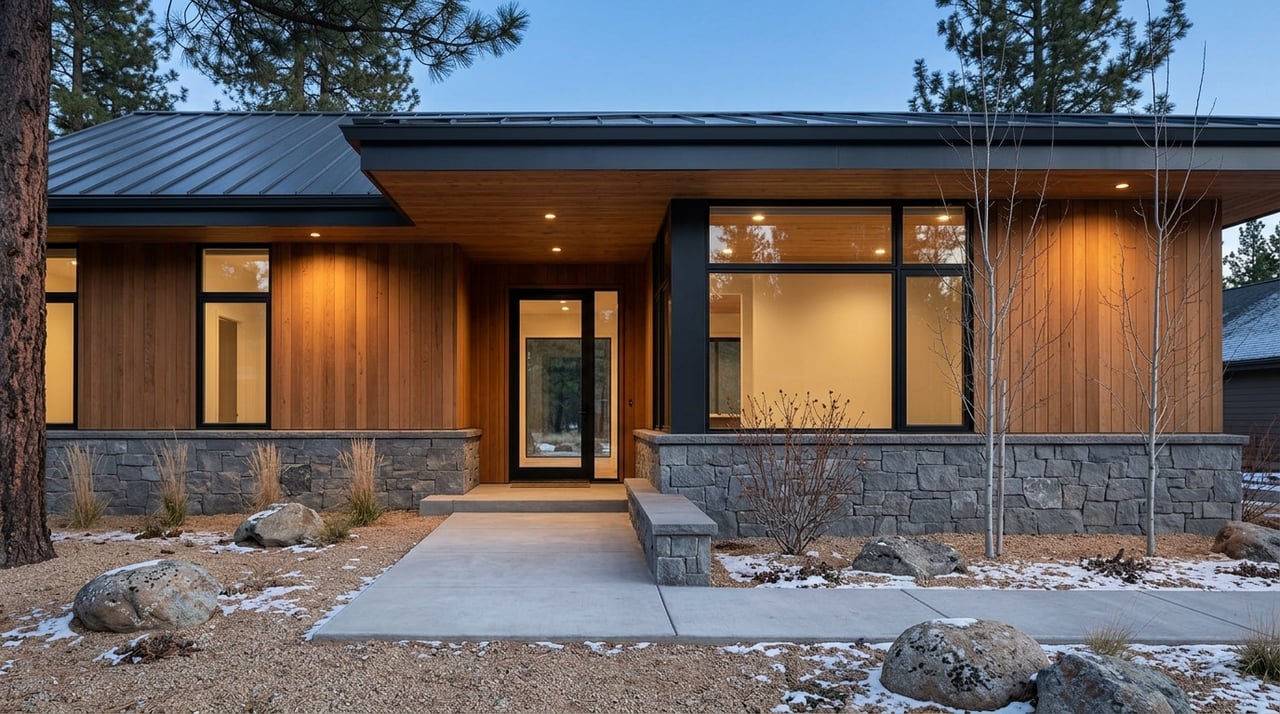
Explore the Northern Colorado Second-Home Lifestyle
May 7, 2026
May 7, 2026
Wondering if a second home in Northern Colorado gives you the lifestyle you want without the price tag or isolation of a classic resort market? That is a smart question, especially if you want easy access to the outdoors, practical travel options, and a home you can actually use across more than one season. In Larimer County, you can find a mix of in-town convenience, foothills scenery, and year-round recreation that appeals to many part-time owners. Let’s take a closer look at what that lifestyle can really feel like.
Larimer County offers a lifestyle that blends everyday convenience with outdoor access. According to the county, more than 50% of Larimer County is publicly owned land, much of it tied to Roosevelt National Forest and Rocky Mountain National Park. The area stretches from community centers and farmland to forests, ranch lands, and high mountain terrain.
For you as a second-home buyer, that means the region does not feel like a single-purpose vacation destination. Instead, it feels connected, varied, and usable in different ways depending on how you want to spend your time. You can enjoy a foothills setting, a low-maintenance in-town home base, or a property with more space and privacy.
Second-home living in Northern Colorado is often shaped by access, flexibility, and ease of use. This is not just about ski-weekend ownership or a seasonal cabin. It is about having a home base near trails, reservoirs, and Front Range communities while still staying plugged into everyday services and transportation.
That makes the area appealing if you want a place that supports both active weekends and longer stays. Whether you picture mornings by the water, quick trips into town, or quiet time in the foothills, the lifestyle here can support a range of goals.
Larimer County spans urban areas, reservoirs, foothills, and mountain terrain. Based on that local geography, second-home options are best understood as a spectrum rather than one specific property type. You may see attached or lower-maintenance homes in town on one end, and foothills or acreage properties on the other.
That range matters because your ideal second home may not look like someone else’s. Some buyers want simple lock-and-leave convenience. Others want land, views, or a stronger connection to open space.
A major part of the second-home draw is how easy it is to reach recreation. Horsetooth Reservoir sits west of Fort Collins and is surrounded by 1,900 acres of public land. Carter Lake, southwest of Loveland, is a year-round foothills reservoir surrounded by 1,000 acres of public lands.
Hermit Park adds another layer to that lifestyle. The park includes cabins, RV and tent camping, a group campground, and trails for hiking, horseback riding, and mountain biking. These amenities help explain why Northern Colorado can attract buyers who want nature access without committing to a traditional resort-town setting.
One reason Northern Colorado works well for part-time ownership is transportation. The Northern Colorado Regional Airport, jointly owned by Fort Collins and Loveland, offers seasonal airline transportation services. That adds convenience if you are traveling in from another region or hosting visiting family and friends.
Local and regional transit also support mobility. Larimer County includes COLT in Loveland, Transfort in Fort Collins, Bustang service to Denver and Grand Junction, and the Estes Park shuttle. The area is also closely tied to the Front Range highway system, with I-25 and westbound U.S. 34 serving as key routes toward foothills recreation.
For many buyers, that connected feel is a major advantage. You get mountain and reservoir access, but you are not relying on a remote, hard-to-reach setting to enjoy your property.
Seasonality matters when you are choosing how and when you will use a second home. In Northern Colorado, summer is the clearest fit for many part-time owners. Warm-weather recreation is broad, active, and easy to enjoy across the county.
At Boyd Lake State Park, activities include boating, camping, water skiing, swimming, fishing, paddlesports, picnicking, bicycling, walking, hunting, and wildlife viewing. Horsetooth Reservoir is open year round, but its swim beaches are open from Memorial Day weekend through October 1. Carter Lake’s swim beach typically operates from Memorial Day weekend through mid-September.
If you imagine your second home as a place for lake days, trail mornings, and long weekends outside, summer is likely the season that brings that vision to life most clearly. It is also the busiest time in many outdoor areas. Popular recreation days often reward early starts and some advance planning.
Larimer County offers text or email alerts when parking at reservoir parks and open spaces reaches capacity. Devil’s Backbone advises arriving before 9 a.m. or after 3 p.m., especially on summer weekends. Hermit Park requires permits, is open only from March through mid-December, and often reaches summer weekend capacity.
Winter use is possible, but it comes with true Colorado weather. NOAA normals for the Loveland 2N station show 47.0 inches of annual snowfall and 15.60 inches of annual precipitation, with measurable snowfall generally concentrated from October through May.
That supports a different kind of second-home rhythm. Instead of a mild off-season, you should expect winter trail use, snow play, and mountain day-trip potential. If you want a second home you will use in winter, it helps to think ahead about access, maintenance, and road conditions.
A part-time home needs a maintenance plan that matches the climate. In a snow climate, small issues can turn into expensive repairs if the property sits unattended for stretches of time. That is especially true in winter.
The U.S. Department of Energy advises keeping heat high enough to prevent pipes from freezing, insulating pipes and ducts in unheated spaces, and weatherizing homes to reduce heat loss. It also warns that freezing water can burst pipes. For a second-home owner, those are practical considerations, not small details.
Larimer County’s own winter operations reinforce that reality. The county reports that its road-and-bridge system plows 660 mainline miles and uses thousands of tons of ice and traction material each year. In other words, winter management is simply part of living here.
Road conditions can change quickly during storms. The Colorado Department of Transportation says traction laws can be activated on any state highway during winter weather. When the passenger vehicle chain law is in effect, every vehicle must have chains or an approved alternative traction device.
CDOT also recommends winter-ready tires and clearing snow and ice before driving. If your second-home plans include regular mountain or foothills trips, it is wise to build flexibility into your travel schedule. A beautiful winter weekend is easier to enjoy when you are prepared for the drive.
For many buyers, the appeal of Northern Colorado is not just lifestyle. It is also the chance to access foothills and mountain-adjacent living at a lower price point than many better-known resort counties.
Census QuickFacts reports median owner-occupied housing values of $479,000 in Loveland and $569,100 in Larimer County. By comparison, Estes Park is listed at $664,200, Routt County at $854,700, and Summit County at $939,900. While these figures do not define every property or neighborhood, they do suggest that Northern Colorado can offer a different value proposition than many classic resort markets.
That difference can matter if you want a second home that feels lifestyle-driven but still grounded in a broader year-round market. You may find more flexibility here than in places where pricing is shaped almost entirely by tourism and resort demand.
A Northern Colorado second home can make sense if you want outdoor access, flexible property options, and practical connectivity to the Front Range. It may also be a fit if you prefer a market that feels more everyday-livable than purely seasonal. The lifestyle here tends to work well for buyers who value both recreation and real-world convenience.
At the same time, it helps to go in with clear expectations. Seasonality, parking capacity at popular recreation areas, winter travel, and home maintenance all shape the ownership experience. When you understand those rhythms from the start, you can choose a property that fits how you actually plan to use it.
If you are exploring a second home in Loveland, Fort Collins, or the surrounding Northern Colorado area, working with a local advisor can help you compare lifestyle tradeoffs, location patterns, and property types with more confidence. When you are ready for thoughtful, local guidance, connect with the Beth Bishop Real Estate Team.
Stay up to date on the latest real estate trends.
We pride ourselves in providing personalized solutions that bring our clients closer to their dream properties and enhance their long-term wealth.