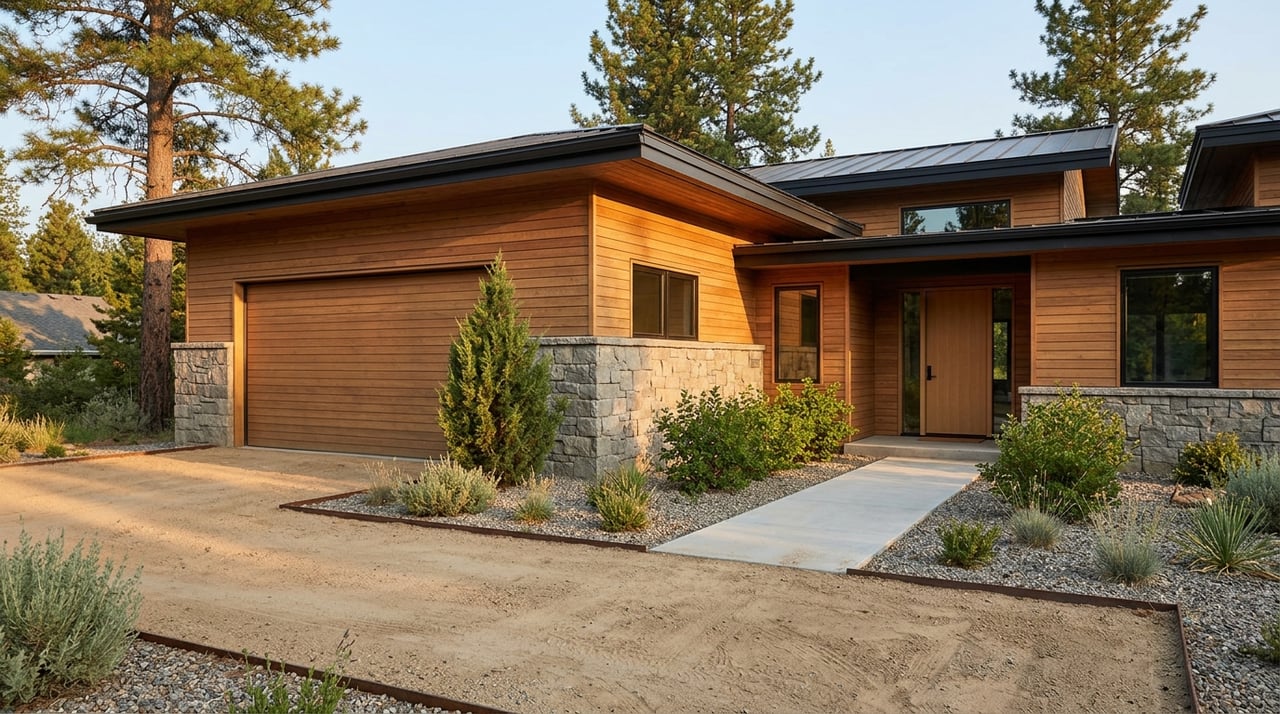
Choosing Between Loveland Acreage and City Homes
April 16, 2026
April 16, 2026
If you are deciding between a home on acreage and a home in an in-town neighborhood in Loveland, you are really choosing between two very different lifestyles. One offers more space, privacy, and flexibility. The other often offers easier daily routines, more predictable utilities, and a broader range of price points. The right fit depends on how you want to live, what level of property complexity you are comfortable with, and how you want your home to function over time. Let’s dive in.
In Loveland, acreage living usually sits in a very different price tier than typical in-town housing. According to Redfin’s Loveland market data, the citywide median sale price was $475,000 in February 2026, while the Colorado Association of REALTORS reported a January 2026 year-to-date median sales price of $529,450 for Loveland single-family homes.
That gap becomes even more noticeable when you look at larger rural properties. Redfin’s Rural Southwest Loveland data shows a February 2026 median sale price of $1.12 million, with active listings that include roughly 4- to 20-acre properties priced from about $925,000 to $1.8 million.
The practical takeaway is simple. If you are considering acreage, you are often shopping in a more specialized and higher-cost segment of the Loveland market.
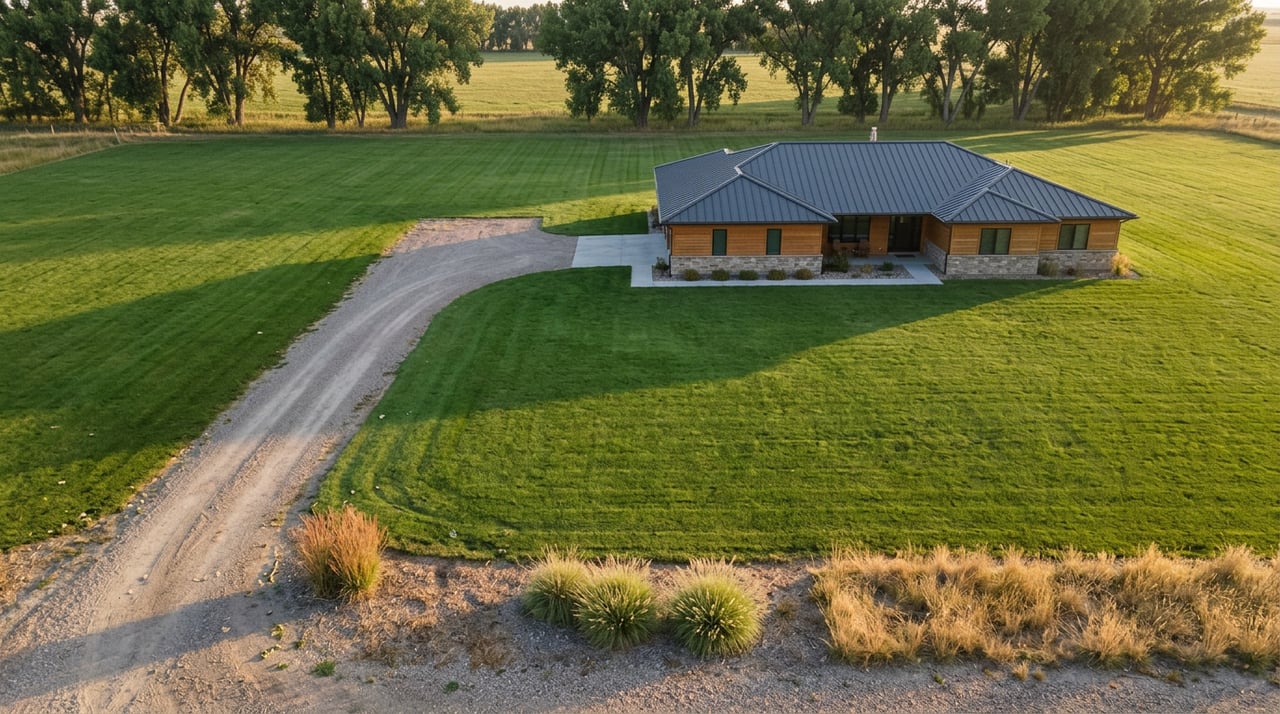
Acreage can be appealing if you want room to spread out and a property that does more than provide indoor square footage. For many buyers, the draw is privacy, distance from neighbors, storage potential, outdoor flexibility, and the ability to use the land in ways that are not always realistic on a standard residential lot.
That said, not every parcel works the same way. In Larimer County’s land use code, rural areas are intended for rural residential and agricultural uses with limited infrastructure and support services. The county notes that lot size rules, water availability, sewer access, and zoning district all affect what a parcel can support.
This matters because buyers often assume that acreage automatically means animals, barns, guest structures, or expanded outdoor use. In reality, those possibilities depend on the specific property’s zoning, utility setup, and subdivision status.
Larimer County’s rural framework includes districts such as RR-1 and RR-2, and minimum lot sizes can vary depending on whether public water and sewer are available. The county also notes that in some rural configurations, minimum lot size can be 2.0 acres when a project has public water and on-lot septic.
For larger projects, the rules change again. The county requires conservation development for rural development of 30 acres or more. That does not affect every buyer, but it shows why acreage decisions should always include a close review of land-use regulations before you assume how the property can be used.
If your priority is convenience, in-town neighborhood living often has a clear advantage. Daily errands, service access, and utility systems are usually more straightforward. Loveland’s average travel time to work is 26.2 minutes, and many buyers use commute efficiency and easier access to services as a major factor when comparing a neighborhood home to a rural parcel.
In-town homes are also more likely to operate within a standard residential utility and tax structure. That can mean fewer unknowns during the buying process and fewer moving parts after closing.
This does not make in-town living better for everyone. It simply means the ownership experience is often more predictable, especially if you value easier maintenance and simpler day-to-day logistics.
One of the biggest differences between acreage and in-town living in Loveland is how utilities are delivered and managed. This is where buyers often discover that a larger property can bring more complexity than expected.
According to Loveland Utilities’ 2026 rates and fees, water tap fees range from $390 to $690, monthly water base charges are higher outside city limits, and raw-water cash-in-lieu fees are listed at $48,825 per acre-foot. Those numbers show how utility planning can become a meaningful part of the cost picture.
Using Loveland’s own typical-use benchmark, the city’s 2026 rate information implies about $90.23 per month for water plus wastewater service inside the city and about $135.41 per month outside the city for the same typical usage. That is a difference of about $45.18 per month.
Loveland also explains in its guide to understanding your utility bill that wastewater charges are based on a winter-quarter average because not all water use goes to sewer. That is especially relevant if you are comparing a standard neighborhood lot to a larger property with more irrigation needs.
In practical terms, a larger lot may use more water for landscaping without that full amount affecting sewer billing. Even so, the total water demand on a property with broader outdoor space can still be noticeably different from a smaller in-town lot.
Acreage ownership often includes systems and responsibilities that many in-town buyers never have to think about. Larimer County’s septic guidance explains that septic systems are self-contained wastewater systems typically used in rural areas, and permits are required to build or repair one.
The county also notes that a new system may be required for new construction or for additional buildings such as guest houses, garages, or barns when a sewer connection is not available within 400 feet. That detail matters if you are buying land for future flexibility rather than only for the existing house.
On top of that, Larimer County’s building guidance directs owners to the Colorado Division of Water Resources or the relevant water district for well and water-service questions. That is a good reminder that rural property ownership can involve multiple authorities, multiple systems, and more due diligence before and after your purchase.
When buyers picture acreage, they often think about open views and elbow room. What they may not picture right away is the long-term upkeep that can come with septic systems, irrigation, drainage, access roads, fencing, and outbuildings.
By contrast, in-town properties often come with a more contained maintenance scope. You may trade land and privacy for less infrastructure to coordinate.
Taxes are another area where a side-by-side comparison matters. Larimer County’s property tax FAQ explains the formula as Actual Value x Assessment Rate x Mill Levy / 1000, and the county notes that residential local-government assessment uses a 6.25% rate.
In 2025 mill levy data for Loveland tax areas, the City of Loveland levy was 9.564 mills. Using the county’s formula, that city levy alone works out to about $358.65 per year on a $600,000 residential property.
The bigger point is that taxes can differ significantly by parcel. An acreage property may sit inside city limits, outside city limits, or within different service or district boundaries, so the total tax picture should always be reviewed on a property-by-property basis.
If you are thinking long term, resale matters just as much as lifestyle. Acreage homes often appeal to a narrower buyer pool because they sit at a higher price point and usually require more due diligence around utilities, access, land use, and property systems.
In-town homes often appeal to a broader range of buyers because they tend to be more affordable and more straightforward to evaluate. That does not mean acreage is a poor investment. It means the resale path is often more specialized, and your buyer pool may be smaller.
For some households, that trade-off is absolutely worth it. If privacy, hobby space, room for outbuildings, or land-oriented use is high on your priority list, acreage may align beautifully with your goals.
If you are weighing acreage versus in-town living in Loveland, it helps to focus less on what sounds exciting and more on what supports your daily life.
Acreage may be the better fit if you want:
In-town neighborhood living may be the better fit if you want:
The best decision usually comes down to how you balance convenience against space. Both options can work well in Loveland. The key is understanding the real costs, rules, and ownership experience behind each one before you commit.
If you are considering a move in Loveland and want a clear, property-specific strategy, the Beth Bishop Real Estate Team can help you compare options with a practical local lens. Whether you are exploring acreage, evaluating in-town neighborhoods, or planning your next move with long-term resale in mind, having experienced guidance can make the decision feel much more straightforward.
Stay up to date on the latest real estate trends.
We pride ourselves in providing personalized solutions that bring our clients closer to their dream properties and enhance their long-term wealth.